Exploration of ethnomathematics in the coastal areas of West Kalimantan
DOI:
https://doi.org/10.21831/ej.v7i1.89451Abstract
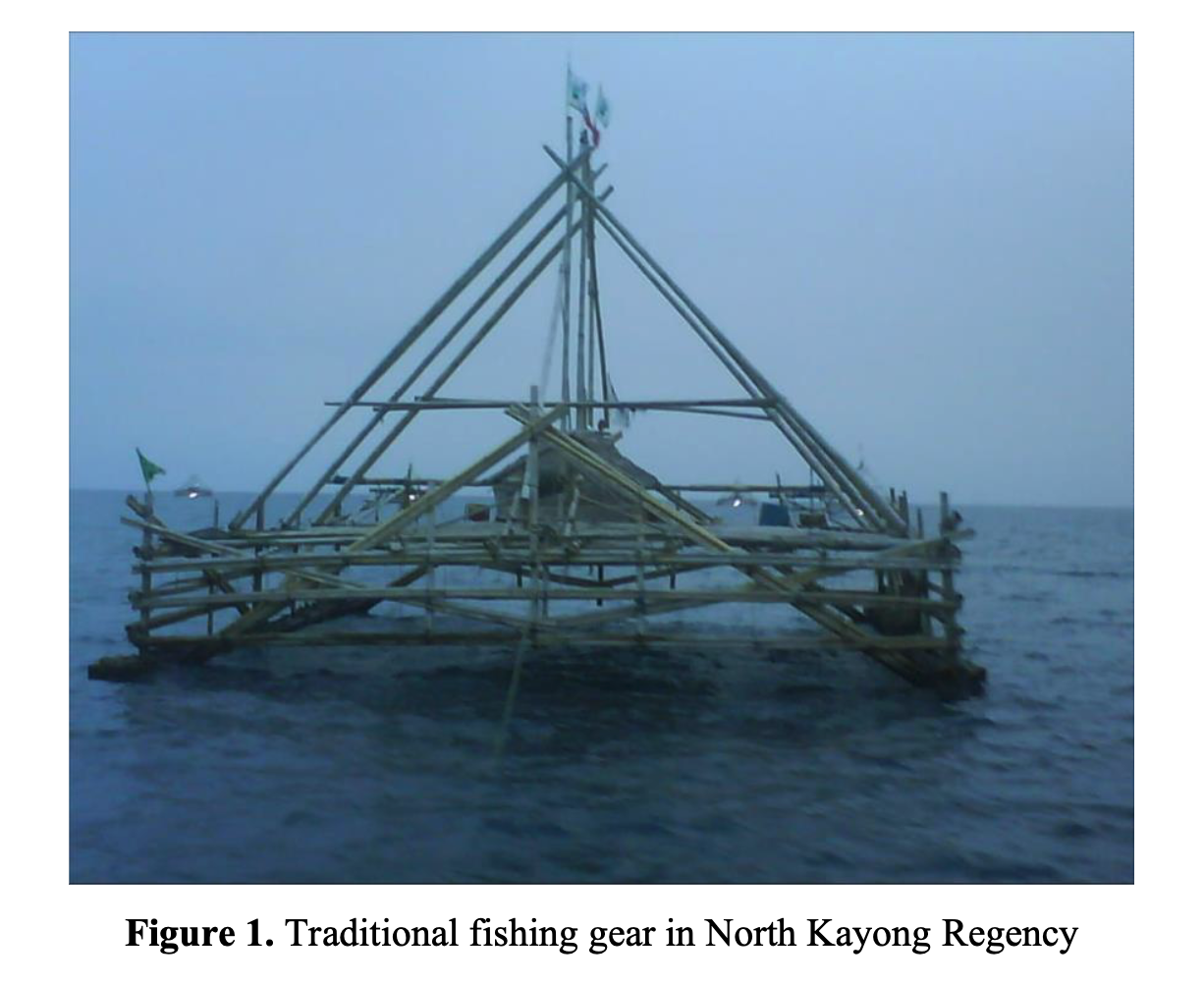
This study explores the ethnomathematical practices of coastal communities in West Kalimantan, Indonesia, revealing how traditional knowledge systems contain rich mathematical concepts embedded in daily life activities. Utilizing qualitative methods, field observations, interviews, and documentation, the research highlights how local practices such as maritime navigation, time estimation, fishing tool construction, trade measurements, and traditional crafts reflect applied mathematics. Although these concepts are not formally expressed in academic terms, they demonstrate a deep understanding of geometry, arithmetic, estimation, and patterns. The study underscores the potential of integrating ethnomathematics into formal education to create a more contextual, inclusive, and culturally relevant mathematics curriculum. These findings support of mathematics education by recognizing and legitimizing indigenous knowledge systems as valuable learning resources. By incorporating local mathematical practices into teaching, educators can bridge the gap between abstract concepts and students’ lived experiences, fostering deeper engagement, enhancing critical thinking, and strengthening cultural identity.
References
Angrosino, M. (2007). Doing ethnographic and observational research. Sage Publications.
Barton, B. (1996). Making sense of ethnomathematics: Ethnomathematics is making sense. Educational Studies in Mathematics, 31(1–2), 201–233. https://doi.org/10.1007/BF00143932
Bishop, A. J. (1988). Mathematical enculturation: A cultural perspective on mathematics education. Kluwer Academic Publishers.
Bowen, G. A. (2009). Document analysis as a qualitative research method. Qualitative Research Journal, 9(2), 27–40.
Braun, V., & Clarke, V. (2006). Using thematic analysis in psychology. Qualitative Research in Psychology, 3(2), 77–101. https://doi.org/10.1191/1478088706qp063oa
Creswell, J. W., & Poth, C. N. (2018). Qualitative inquiry and research design: Choosing among five approaches (4th ed.). Sage Publications.
D’Ambrosio, U. (1985). Ethnomathematics and its place in the history and pedagogy of mathematics. For the Learning of Mathematics, 5(1), 44–48.
D’Ambrosio, U. (2001). Ethnomathematics: Link between traditions and modernity. Sense Publishers.
Denzin, N. K. (1978). The research act: A theoretical introduction to sociological methods (2nd ed.). McGraw-Hill.
Ernest, P. (1991). The philosophy of mathematics education. Falmer Press.
Gerdes, P. (1999). Geometry from Africa: Mathematical and educational explorations. Mathematical Association of America.
Israel, M., & Hay, I. (2006). Research ethics for social scientists. Sage Publications.
Kvale, S., & Brinkmann, S. (2009). InterViews: Learning the craft of qualitative research interviewing (2nd ed.). Sage Publications.
Miles, M. B., Huberman, A. M., & Saldaña, J. (2014). Qualitative data analysis: A methods sourcebook (3rd ed.). Sage Publications.
Patton, M. Q. (2015). Qualitative research & evaluation methods (4th ed.). Sage Publications.
Rosa, M. & Orey, D. C. (2011). Ethnomathematics: the cultural aspects of mathematics. Revista Latinoamericana de Etnomatemática, 4(2). 32-54.
Rosa, M., & Shirley, L. (2016). Ethnomathematics and its diverse approaches for mathematics education. Revista Latinoamericana de Etnomatemática, 9(2), 1–22.
Seidman, I. (2013). Interviewing as qualitative research (4th ed.). Teachers College Press.
Spradley, J. P. (1979). The ethnographic interview. Holt, Rinehart and Winston.
Spradley, J. P. (1980). Participant observation. Holt, Rinehart and Winston.
Zaslavsky, C. (1996). The multicultural math classroom: Bringing in the world. Heinemann.
Downloads
Published
How to Cite
Issue
Section
Citation Check
License

This work is licensed under a Creative Commons Attribution-ShareAlike 4.0 International License.
Authors retain copyright and grant the journal the right of first publication.
The authors are responsible for the content of their work.